

The traps look different now, but they still cost later
From 5 per cent deposit schemes and SMSF blind spots to supply headlines, tax shocks, oil risk and the false comfort of “playing it safe”, this week’s issue is about the expensive mistakes that often
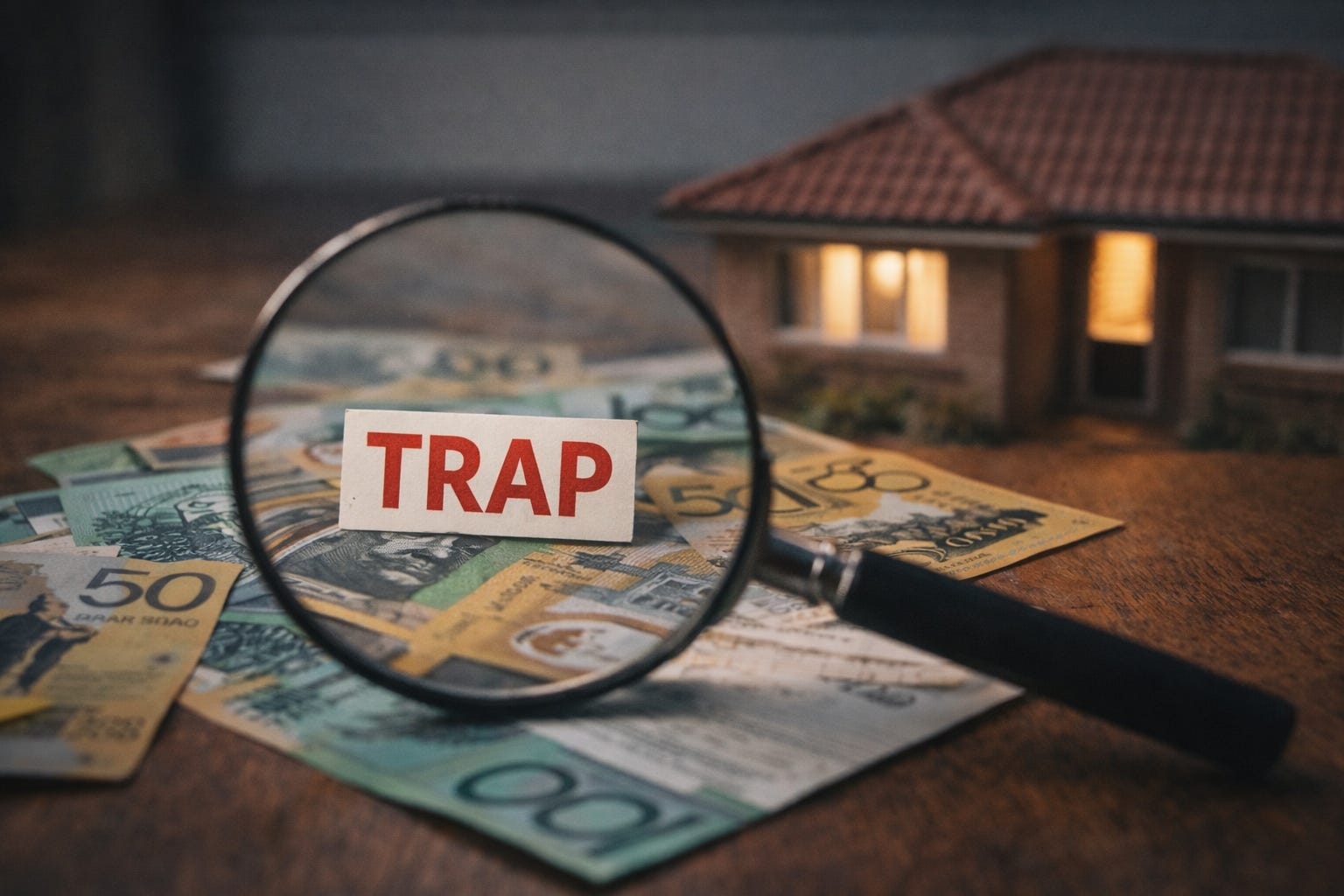
Today’s issue is about bad trade-offs that arrive wearing good marketing.
Some are sold as access: a lower deposit, an easier path in, a dream home overseas. Some are sold as control: run your own super, trust the structure, back your own judgement. Some are sold as progress: more approvals, more policy action, more support for supply. And some are sold as prudence: wait a bit longer, play it safe, stick with what feels comfortable.
The problem is that the cost often shows up later. Not in the headline. In the structure underneath it.
That is the link across this week’s APReview stories. The market is still full of things that look helpful on the surface but become harder, dearer or riskier once real life arrives. That is where readers need to be paying attention.
1) The “help” can still push buyers deeper into the problem
The first-home buyer scheme story is the cleanest example. A policy designed to solve the deposit hurdle may be worsening the price problem in the exact part of the market it targets. APReview’s point is not that access never matters. It is that demand-side help can still end up bidding against itself when supply is tight. That is when assistance stops feeling like relief and starts looking like price support.
Read:
2) Supply headlines still hide a viability problem
Dwelling approvals rose, but Australian Property Review’s line is that this does not automatically mean the housing fix is arriving. The approvals story sits awkwardly beside the builders’ relief push and the paint-cost piece, both of which argue that the real constraint is not only demand for homes but whether projects still stack up once costs, freight, fuel and margins are run properly through the spreadsheet. In other words: approvals can rise while delivery still disappoints.
Read:
Dwelling approvals jumped, but Australia’s housing fix still looks shaky
Builders want Covid-style relief as costs rip through housing
Paint prices are rising too, and builders won’t absorb it forever
3) Control is not the same thing as an edge
The SMSF story fits the same pattern. The attraction is obvious: more control, more say, more flexibility. But APReview’s warning is that the hardest test often shows up years later, when the fund is larger, retirement is closer, compliance is more draining and the cost of a bad decision is no longer theoretical. The super policy piece adds another layer: even when trustees are acting independently, politics can still try to shift costs back onto them.
Read:
4) Wealth mistakes often start as harmless delay
The wealth-building pieces for younger Australians and Gen X readers point to the same behavioural risk from different stages of life: waiting too long, confusing income with wealth, and mistaking caution for strategy. The $200 million property empire article pushes that logic into housing directly, asking what experienced buyers get right about homes that newer buyers often miss. These are not “get rich quick” pieces. They are about the quiet habits and frameworks that shape whether someone ends up owning productive assets or just earning and spending in a more expensive loop.
Read:
5) The tax hit is often waiting at the edge of the dream
The overseas property piece is exactly the sort of APReview story that earns clicks because the risk is easy to miss until it is expensive. Buying or keeping a home overseas can feel like a lifestyle or family decision first, but tax residency and CGT treatment can turn it into something very different. The budget tax story lands in a similar place for local investors: policy changes do not always force an immediate exit, but they can leave investors trapped longer inside weaker after-tax economics.
Read:
6) Compliance and market power still matter more than they look
Two of this week’s less obvious stories deserve attention for the same reason: they look niche until they are not. AUSTRAC’s property crackdown is a reminder that the rules can tighten before the formal deadline most people are watching. And the PEXA story is really about something larger than one share price: who controls settlement infrastructure, how regulation bites, and why markets can still punish a business that appears to have kept its moat. Both matter because property is not just houses and loans. It is also the compliance and plumbing around the transaction.
Read:
The bigger takeaway
This week’s stories all point to the same lesson: the expensive part of a property or wealth decision is often not the first step. It is the structure you are left carrying after the excitement, subsidy, control, optimism or convenience has worn off.
That is the signal this week.
A lot of Australians are still looking for the smarter shortcut. The more useful question may be whether the shortcut is quietly building a trap that only becomes obvious later.