

The old property script is breaking
Sydney and Melbourne are losing momentum, Perth and Brisbane are still running, investors are freezing before the budget, and even “safe” wealth moves look different when supply, tax and demographics
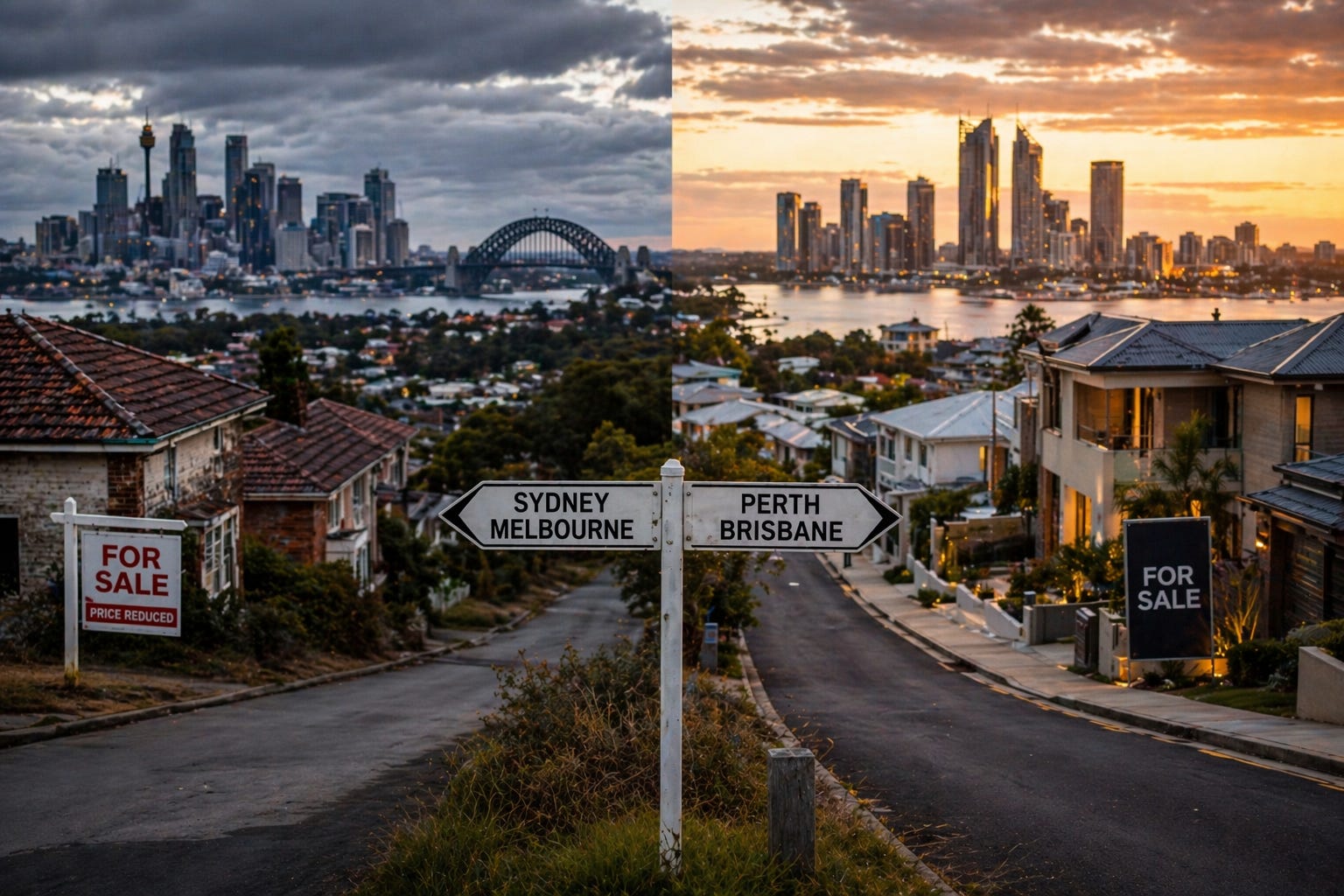
Today’s issue is about a market that no longer fits the old Australian property story.
For years, the script felt familiar. Sydney and Melbourne led. Luxury followed prestige-city gravity. Investors kept buying through the noise. Supply was always promised, rarely delivered, but the national narrative still sounded neat enough to explain at a barbecue. This week’s Australian Property Review coverage suggests that story is getting harder to trust.
Sydney and Melbourne have edged into decline while Perth, Brisbane and Adelaide keep carrying stronger momentum. In Western Sydney, buyers are still competing hard for limited affordable stock. At the top end, the old luxury pecking order is shifting too. And in the background, supply risk is being worsened by the sort of development hesitation that only shows up in prices and rents later.
That is before you get to the tax question.
Investors are not just worrying about rates now. They are hesitating because tax risk is harder to price, and because even reforms sold as sensible can have awkward side effects for supply, affordability and buyer behaviour. Add the broader household pressure from fuel and cost-of-living shocks, and the result is a market that feels less like one national cycle and more like several competing realities at once.
1) Sydney and Melbourne are no longer telling the whole story
One of the clearest signals this week is that the national market is splitting harder. Sydney and Melbourne, the country’s biggest and most rate-sensitive housing markets, have slipped in recent months, while Perth, Brisbane and Adelaide have kept posting stronger gains. That makes the usual “Australian property” headline less useful than it looks.
Read:
2) Affordable demand is still fierce where people can actually stretch
A softer top-line market has not made entry easy. In parts of Western Sydney, buying is starting to look less like a search and more like a contest because stock is tight and affordable options inside Sydney’s orbit remain limited. That is a useful reminder that “cooling” and “easy” are not the same thing.
Read:
3) The supply story is getting worse quietly
Meriton’s decision to stop buying new development sites in Sydney is bigger than one developer’s complaint. APR’s point is that if a major apartment builder says the numbers no longer work, the damage shows up later through fewer launches, tighter supply and a city that stays more expensive than policymakers hoped.
Read:
Meriton’s Sydney freeze is a warning shot for housing supply
Why a CGT cut sold as reform could deepen the housing squeeze
4) Investors are not just scared of bad news. They are scared of unclear rules
One of the more revealing stories this week is that investors appear to be freezing decisions before budget night, not necessarily because reform is certain, but because uncertainty itself is enough to stall action. That matters because markets can often absorb bad news faster than they can absorb unclear rules. Melbourne’s experience also suggests policy pressure can bite differently depending on where a city already sits in the cycle.
Read:
Why investors are freezing property buys before budget night
Melbourne’s tax squeeze is real, but other cities may dodge the fallout
5) The next winners may come from demographics, not hype
The working-age population piece is the kind of story that does not feel urgent until it suddenly matters a lot. APR argues that the shape of the 25-to-54 population may do more to determine local housing demand over the next decade than many headline-driven investors realise, with some councils set to add large numbers of prime working-age residents while others go backwards.
Read:
6) In a more uneven property market, personal finance matters more
This week’s non-property pieces fit the same broader mood. When the market stops giving easy answers, readers start looking harder at what they can control: building multiple income streams, understanding how fast money really compounds, and not wasting legal tax opportunities. These stories work well in the issue because they widen the lens without breaking the theme.
Read:
7) The budget squeeze may arrive before the mortgage does
The household-budget piece is a strong closer because it connects geopolitics to everyday pressure without sounding abstract. Petrol, groceries, freight, travel and confidence can all tighten before a household even feels the next housing hit directly. That is part of why this week’s issue hangs together: the pressure is spreading across policy, supply, affordability and household cash flow at once.
Read:
The bigger takeaway
This week’s stories point to the same conclusion: Australian property is getting harder to understand with one national headline. The old script is breaking at the top end, in investor behaviour, in city leadership, in supply, and even in the kinds of wealth habits readers now need to fall back on.