

Sydney for under $1m: 5 NSW pockets buyers are watching for 2026
Forget the “everything is $2m” panic the value game is happening on the edges, where listings are tight and demand is spilling out.
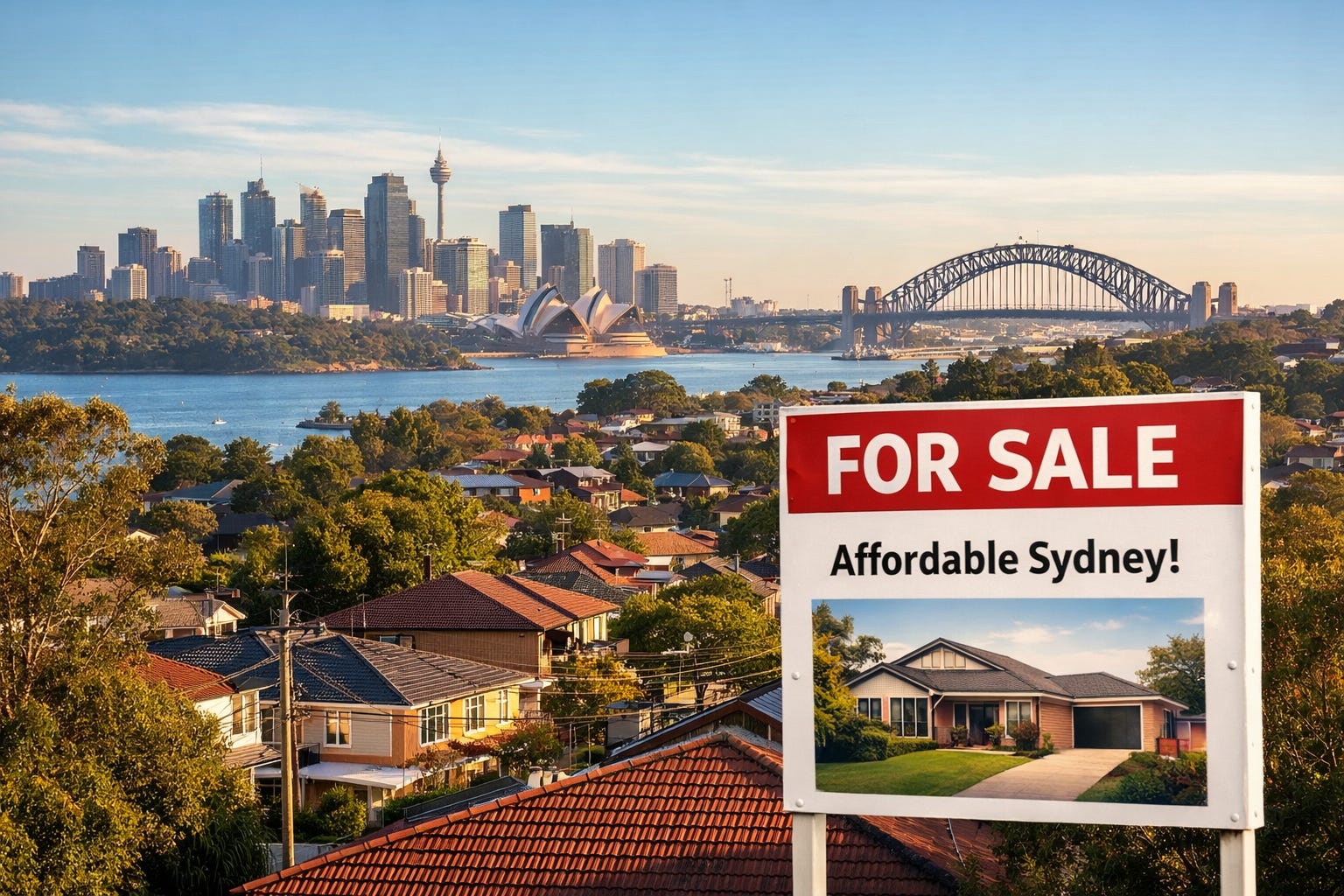
Sydney is expensive. No argument. But “everything is $2 million” is lazy maths, and it can stop you from seeing the only part of the market that still matters for sub-$1m buyers: the spillover zones.
If your budget tops out under $1m, you’re not shopping inner-city prestige. You’re shopping outer-ring corridors and lifestyle-linked pockets where buyers want NSW exposure, a liveable story, and a commute they can tolerate (even if it’s not daily).
This is the play: pick the pocket carefully, then pick the asset even more carefully.
Why Sydney is holding up heading into 2026
Sydney hasn’t been doing the big headline whiplash lately. It’s been moving in a steadier rhythm, not flashy, but that’s often how stronger parts of a cycle rebuild.
What’s doing the work underneath:
Transport-led growth: people will live further out if the commute feels manageable.
Planning and supply pressure: more dwellings are needed, but delivery is slow.
Demand spillover: when the inner ring is out of reach, buyers don’t disappear — they relocate.
For sub-$1m buyers, that means the “best” opportunities aren’t blue-chip suburbs doing Olympic-level gymnastics. They’re the edges where demand shows up first.
The sub-$1m “Sydney exposure” checklist
This is where you win or lose months.
Look for:
Days on market falling: sales speeding up usually means confidence is rising.
Listings staying tight: scarcity keeps competition real.
Rental demand that doesn’t go quiet: you want a market that holds up when sentiment wobbles.
A story locals believe: owner-occupier pull, lifestyle appeal, and a workable commute.
One more rule: don’t buy the suburb. Buy the street. Outer-ring markets can change block to block.
The catch with “affordable Sydney”
Some “cheaper” pockets are still stretched when you compare incomes to prices. In those areas, growth can lean heavily on the wider Sydney cycle.
Plain English: it can rise, but it’s not a loophole. You’re often relying on Sydney’s momentum more than the suburb’s affordability tailwinds.
5 NSW locations on the radar for 2026
These aren’t inner-city blue chips. They’re the types of areas that keep popping up when buyers want NSW exposure under $1m — and they’re tracking the usual signals: tighter listings, faster selling, and rental demand that stays stubborn.
1) Winmalee (Blue Mountains)
Why it’s getting attention
Strong lifestyle pull for Sydney buyers who already “get” the Mountains.
Familiar market feel, calmer pace, still close enough to manage.
Due diligence that matters
Bushfire risk is property-specific. This is not a “tick-the-box suburb” purchase it’s a house-by-house risk check.
2) Ruse (South West Sydney, Campbelltown area)
Why it’s on the list
Often still within reach for sub-$1m buyers (by Sydney standards).
Demand can firm up quickly when listings thin out.
What to watch
Street-by-street variation is huge. Two pockets can feel like different suburbs — and perform like it too.
3) Raby (South West Sydney, Campbelltown area)
Why it’s on the list
Similar orbit to Ruse, with a mix of houses and units.
Can still offer sub-$1m options depending on property type and condition.
Reality check
You’re buying exposure and demand, not CBD convenience. If your strategy relies on prestige or walk-to-everything living, wrong lane.
4) Narara (Central Coast)
Why it’s on the list
Central Coast markets often carry stronger owner-occupier influence, which can help values hold when buyers get picky.
Lifestyle story + rental competition can be a powerful combo.
Who it suits
Buyers who want NSW exposure with a “liveable” narrative tenants also buy into.
5) Medowie (Port Stephens)
Why it’s on the list
Further out, but shows up often when buyers want value + liveability without Sydney’s entry price.
Lifestyle-led demand can keep activity moving even when the mood shifts.
The practical lens
If you’re investing from Sydney, your local property manager and local eyes matter more. This isn’t one to buy blind.
If you’ve got a bigger budget: two Sydney plays worth understanding
If your budget stretches further, Sydney becomes less “buy and wait” and more “buy well, then benefit from structure”.
Value plays near transport
Older, solid unit stock near rail and services can still show value gaps, especially when build costs have surged, and rents are tight.
What to look for:
Walkable access to a station + daily services
Solid, boring buildings (no drama)
Strata that’s clean and transparent (not a mystery box)
Policy-driven supply changes
NSW planning settings have been shifting towards more low/mid-rise housing around centres and transport hubs.
Practical takeaway: don’t just ask “what’s the suburb like?” Ask:
What’s approved already?
What’s likely next?
Where’s the housing pipeline actually going?
That’s how you avoid buying the wrong asset in the right postcode.
How to choose the right buyer’s agent in these markets
Outer-ring and lifestyle corridors can reward buyers, but they punish lazy selection. One street is a win, the next is a “why did we do this?” moment.
Compare by fit, not hype:
Local focus: have they bought in your corridor recently, and what did they reject?
Process: how do they shortlist, price-check, and say “no”?
Negotiation: auctions, private treaty, or both and what’s common in your target areas?
Scope + fees: fixed vs percentage, inclusions, extras, and what happens if you pause.
9 questions to ask before you sign
What suburbs are you actively buying in right now, and why?
How many purchases have you done in this corridor in the last 12 months?
Talk me through your selection process step-by-step.
What’s on your “no list” (flood, bushfire, strata traps, zoning, main roads)?
How do you judge fair value in a fast-moving week?
What due diligence is in-house vs outsourced?
How do you define “off-market”, and what counts as genuinely off-market?
What are all fees (including extras), and when are they payable?
Who do you work best for, and who shouldn’t hire you?
If they can’t answer clearly, that is the answer.
Red flags you can spot early
“I cover all of Sydney” (with no recent proof in your corridor)
Vague scope and slippery fee terms (“that’s extra” surprises)
Street-level questions answered with suburb-level fluff