

The low-deposit land trap: why “cheap to secure” can cost you big
A small upfront deposit feels like a win; until titles shift, builds blow out and your rent clock doesn’t start for months (or years).
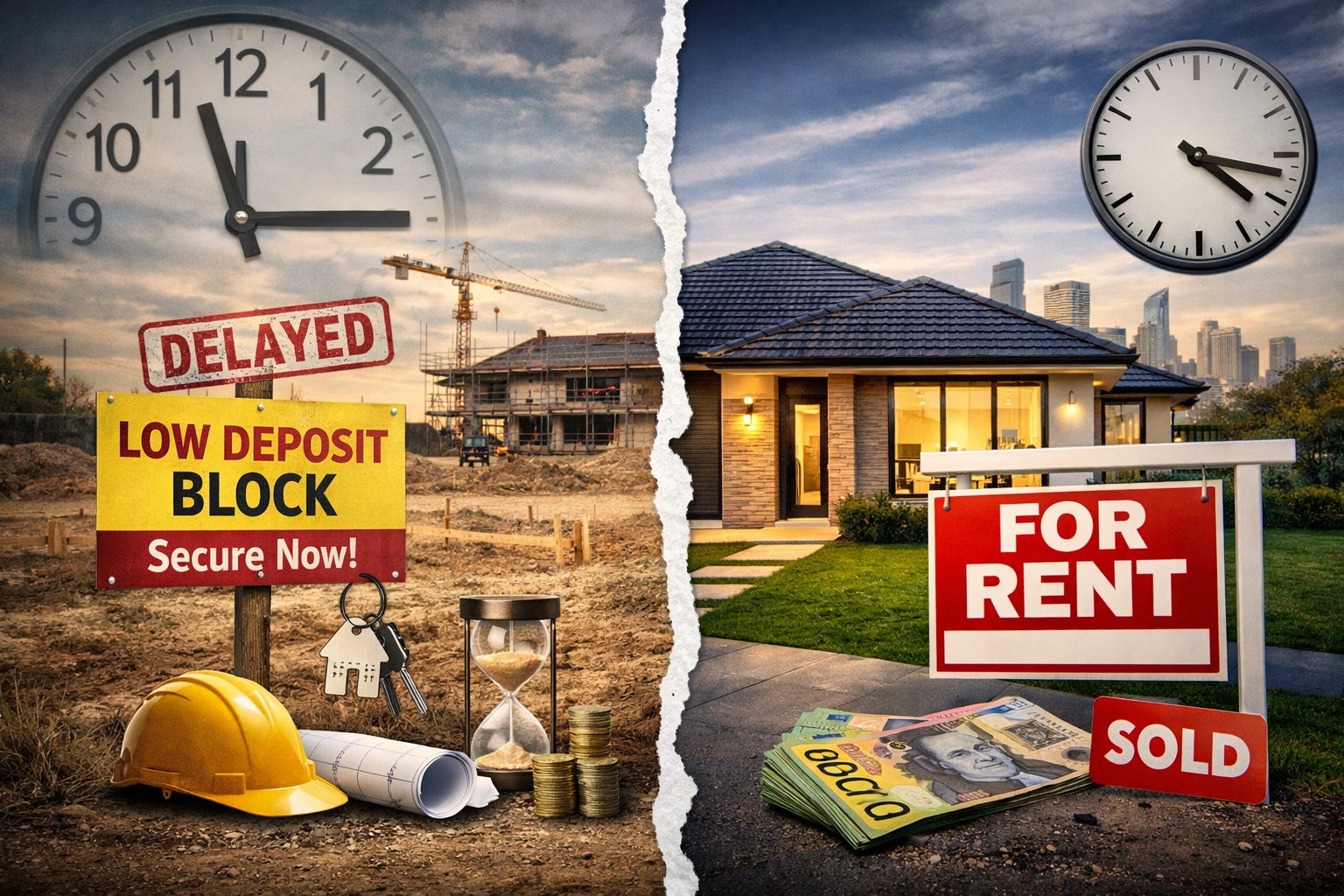
A low deposit can feel like a cheat code. Drop $30k, “secure” a block, and tell yourself you’ve beaten the market before it even moves.
Sometimes that works.
But property doesn’t reward vibes. It rewards timelines, contracts, buffers, and what happens when the plan goes off-script — because it usually does.
If you’re weighing untitled land (buy now, settle later) against an established property (settle soon, rent sooner), don’t treat it like a price comparison. Treat it like a time-and-risk comparison.
Because the biggest difference isn’t the sticker price.
It’s the months where you’re paying… and earning nothing.
The quick verdict most buyers miss
“Cheap to secure” isn’t the same as “cheap to own”.
A low deposit only tells you one thing: how easy it is to sign.
The real cost lives in the gap between contract day and keys (or rent) day — stamp duty, settlement funds, holding costs, build delays, price rises, and the ugly surprises that never make the brochure.
If your deal only works when everything runs perfectly, you don’t have a strategy. You’ve got a wish.
The three clocks that decide your outcome
Most buyers argue land vs established like it’s a simple “new vs old” debate. It’s not.
It’s three clocks.
1) The title clock
Untitled land means you’re waiting for the block to become a legal, registered lot.
That timeline can blow out… or snap forward. Either way, you don’t control it.
When the developer says “titles are ready”, you need finance ready — not “we’ll sort it later”.
2) The build clock
Even after settlement, you don’t have a house yet.
Build timelines move with approvals, weather, labour, materials, builder capacity — and delays stack fast. Every extra month is another month you’re paying without enjoying the asset.
3) The rent clock
This is the one that quietly wrecks plans.
Established property can produce income soon after settlement.
Untitled land + build can mean a long stretch of zero rent while your cash and borrowing power are tied up.
Get the clocks wrong and the “bargain” starts bleeding.
Titled vs untitled land in plain English
Titled land
It’s registered, real, and ready to settle like a normal purchase. The timeline is clearer and you’re not waiting on developer paperwork to finish.
Untitled land
You can sign today, but you can’t settle yet. You’ve bought a place in the queue.
You pay a deposit now, then wait for titles. Only then can you settle. Only after settlement can you build. Only after building can you live in it or rent it.
That’s not a small detail. That’s the whole game.
Why untitled land looks so attractive upfront
It sells you control
A small deposit makes it feel like you’ve grabbed a big asset with tiny effort — and if prices rise while you wait, it feels like you’ve won before you’ve even settled.
You get “first pick”
Early releases can mean better blocks — nicer shape, frontage, fewer easements, better position in the estate.
You can design for renters
Sure. A smart layout helps.
But design is a multiplier, not the engine. If demand isn’t real, no floorplan saves you.
The risks buyers usually learn the hard way
Sunset clauses: deposit back, years gone
If titles drag out, many contracts allow cancellation and you get the deposit returned.
But you don’t get the time back.
Those months could’ve been building equity, earning rent, or funding a different purchase.
Settlement can jump forward
The pitch might say “18 months”. Then the email arrives: “titles are earlier — prepare for settlement.”
Banks don’t care about your plan. They care about your situation now. If lending rules tighten or your income changes, you can get squeezed at the worst time.
New areas are hard to verify
Established suburbs leave footprints.
New estates leave brochures.
Sales history can be thin, rental trends can swing as supply lands in waves, and “coming soon” infrastructure can be delayed, resized, or scrapped.
Exit options can be limited
If your life changes — job, rates, family — you may not be able to nominate or on-sell easily. Some contracts restrict it, or make it expensive and slow.
This is why a solicitor review isn’t optional. It’s the cost of not getting wrecked by fine print.
The 2026 reality check: building is the bottleneck
The low-deposit dream usually breaks at the build stage.
Costs can rise between signing and starting
Delays can turn “cheap” into “expensive” (holding costs + no rent)
Builder risk is real, and a collapse mid-project can mean legal pain, delays, and a higher price to finish
There’s also a hidden cost: your borrowing capacity gets stuck while the project is unfinished and income is still future tense.
So when you hear “buy now, build later”, translate it properly:
longer timeline, more moving parts, less flexibility.
Why established property often wins on fundamentals
Rent sooner, feedback sooner
You settle, you rent it, income starts. That eases cashflow pressure and gives quick market feedback.
You can see what you’re buying
Street, noise, traffic, parking, neighbours, condition — reality beats renders every time.
Land does the heavy lifting
Buildings age. Land appreciates.
Established homes often have a bigger land-value component, especially where supply is tighter. That’s usually the part you want working hardest for you.
When untitled land can make sense
Untitled isn’t automatically bad. It’s just not forgiving.
It can work if you’ve got:
real buffers (cash + servicing) for delays and surprises
buyer-friendly contract terms (or at least balanced)
patience for uncertainty (12–24+ months is normal)
genuine demand today and not endless competing supply
If one of those is shaky, it’s not a strategy. It’s a gamble dressed up as a plan.
A simple decision framework: 7 questions
Do I need rental income soon?
If settlement is brought forward, can I still settle?
If the build runs 12–24 months late, can I cope financially?
What’s my real contingency for build costs and variations?
Can I exit if my situation changes?
Is there proven demand today — not just glossy promises?
Will this help or hurt my next purchase?
Answer these honestly and you’ll usually know your move.
Due diligence that stops expensive surprises
Contract checks (with a solicitor)
Sunset date + extension rights
Nomination/assignment rules
Deposit timing + where it’s held
Inclusions/exclusions (what “standard” really means)
Variations + price-change clauses
Settlement triggers + notice periods
Area checks
Supply pipeline (how much new stock is coming)
Vacancy + actual rents being paid now
True comparable rents/sales
Resale competition (how many near-identical options buyers will have)
A few hours of checking can save you years of regret.
Closing thought
Property rewards clean execution.
Untitled land can work but you’re managing more moving parts for longer.
Established property is often simpler: settle, rent starts, move to the next step faster.