

CGT shake-up talk is back, and it's messing with investor timing
Budget rumours and tax chatter can paralyse buyers. Here’s what a CGT discount change might do, the sneaky supply side-effect many miss, and why land sell-offs could reshape a few local pockets.
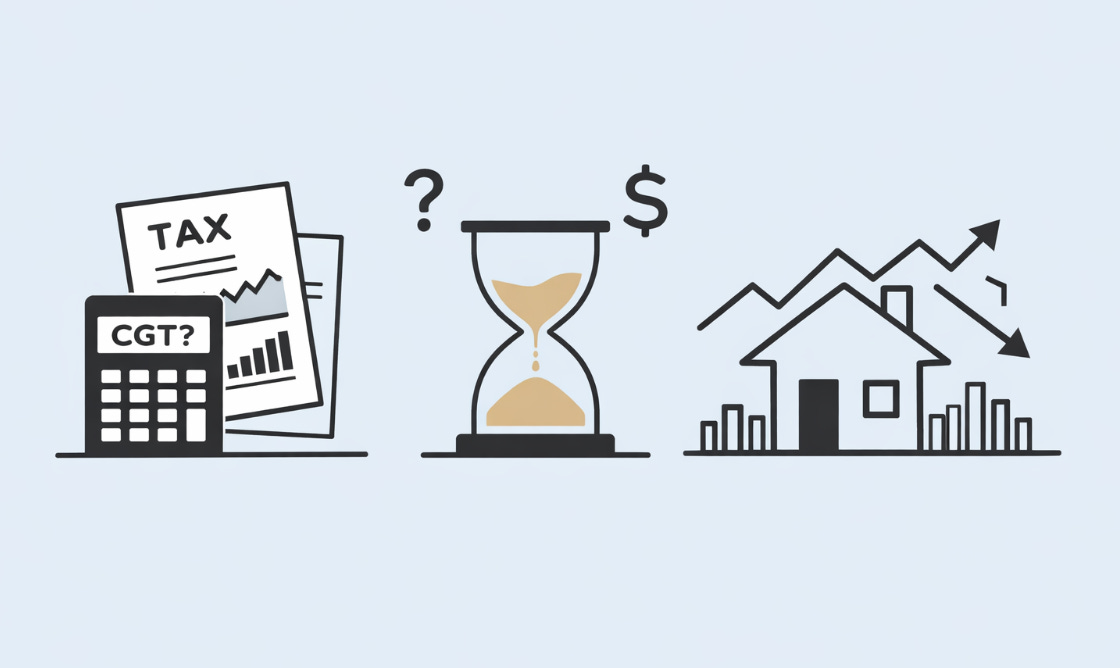
Policy noise can do two things: freeze decisions or sharpen them.
Right now, investors are being hammered with a familiar mix: capital gains tax headlines, Budget speculation, “tax reform” talk and housing crisis politics. The real risk isn’t the news itself. It’s what it does to your timing: hesitation, second-guessing, waiting for certainty that rarely arrives, while the market keeps moving.
Here’s what matters, what doesn’t, and what you can actually control.
Why the CGT discount is back in the spotlight
The CGT discount
For many Australian investors, the CGT discount is the rule that can reduce how much of a capital gain is taxed when an investment is sold.
Generally, if an Australian resident individual holds an investment asset for 12 months or more, they can often reduce the capital gain counted as taxable income by 50%. Trusts can typically access the discount too, while super funds operate under different rules.
The simple takeaway: hold long enough and, in many cases, only half the gain is treated as taxable.
Why it’s being talked about again
It keeps resurfacing because policy groups and economists argue tax settings influence housing demand and prices, and Budget season tends to drag these debates into the open. That doesn’t mean a change is locked in. It means the conversation is loud, and loud conversations can distort decision-making.
If the CGT discount changes, will prices fall?
The common headline question, “Will prices crash?”, is usually the wrong one.
Tax changes tend to shift behaviour first, then prices (sometimes). Most serious analysis points to modest downward pressure over time rather than a dramatic cliff, especially because Australia’s bigger driver remains supply constraints.
If you’re waiting for a 20–30% “reset” because a single tax lever moves, that’s a long wait. Policy can change the slope. It rarely changes the whole direction.
The grandfathering detail that changes everything
A key design choice is whether changes are “grandfathered”.
Grandfathering means the new rule applies only to assets bought after a start date, while existing owners keep the current treatment. If that happens, you often see two predictable reactions:
A pre-change rush: buyers try to beat the cut-off.
A post-change pause: turnover slows as people reassess returns.
So the sharper question isn’t “Will prices fall?” It’s: How will behaviour change around timing, cut-off rules, and turnover?
The hidden risk: fewer listings, more hold-outs
Here’s the second-order effect that doesn’t fit neatly into a headline.
If selling is taxed more heavily, selling becomes less attractive. Some owners won’t list. They’ll hold, refinance, or delay decisions rather than crystallise a larger tax bill.
That can mean fewer listings, and when listings tighten, prices can stay supported even in shaky sentiment, particularly in areas with limited new supply and strong owner-occupier demand.
In other words: you might cool demand a bit, but if supply tightens quietly too, the price drop people expect may not show up the way they imagine.
A different lever investors should watch: government land sales
While tax reform grabs attention, another supply lever can matter in specific pockets: large government land releases, including the sale or redevelopment of major sites.
Big parcels can reshape local markets, not overnight, but through:
New dwelling supply (eventually)
Amenity upgrades (retail, parks, streetscapes, transport links)
Demand shifts (jobs, construction activity, improved liveability)
Ripple effects from rezoning, infrastructure spend, and timelines
“Opportunity” doesn’t mean “buy nearby”
Smart investors use guardrails before getting excited:
Constraints: heritage rules, contamination risk, remediation costs
Timeframes: announcements can take years to become real housing
Data checks: supply pipeline, vacancies, rent pressure, buyer depth
Signals are useful. Fundamentals still decide the outcome.
Why 2026 feels uneven: the K-shaped economy effect
It can feel like two economies at once, because for many households, it is.
Some are seeing relief through improving incomes and stronger balance sheets. Others remain squeezed by repayments and living costs. Same interest rates, very different outcomes.
Property markets reflect that split:
Scarce, premium suburbs can stay competitive as buyers with equity become more selective (not absent).
Fringe and rate-sensitive markets can wobble first when borrowing power tightens.
Asset quality matters more: “property” isn’t one market, the gap widens between durable demand and hype-driven pockets.
The four rules for investing through policy noise
1) Don’t make 30-year decisions off 30-day headlines
Budget chatter is a weather report, not the climate. Use it as context, not a trigger to panic-buy or freeze.
2) Stress-test borrowing and cash flow before you shop
Most investor pain isn’t “the wrong suburb”. It’s buying something the cash flow can’t carry when conditions shift.
Minimum checks:
Rate buffer: can you hold if rates stay higher longer?
Vacancy buffer: what happens if you’re empty for 2–6 weeks?
Holding costs: insurance, maintenance, strata (if relevant), land tax
Scenario testing: good / neutral / annoying, and it still works
If the deal can’t breathe, don’t buy it.
3) Buy fundamentals, not feelings
In noisy seasons, fundamentals do the heavy lifting:
Employment depth (diverse jobs base)
Vacancy trends (rental tightness and stability)
Supply pipeline (what’s approved, planned, and coming online)
Connectivity (transport and access that actually gets used)
Income mix and buyer depth (who can buy when credit tightens)
4) Have an execution plan, or hesitation will cost you
The market doesn’t punish caution. It punishes being unprepared.
A clean workflow:
strategy → lending fit → suburb shortlist → due diligence → negotiation
When that’s in place, policy noise becomes background, not a roadblock.
Quick FAQs
Will CGT discount changes crash prices?
Unlikely on their own. More commonly, behaviour shifts first, then growth slows or varies suburb-by-suburb.
What does grandfathering mean?
Existing owners keep current rules; new rules apply only to purchases after a start date.
Could changes lift rents?
It depends. If investor participation falls without enough new supply, rental availability can tighten. If policy changes coincide with real supply growth, pressure can ease.
Are big government sites guaranteed to become housing?
No. Approvals, constraints, remediation, and timelines can delay or reduce what’s built.
What should investors do before the March Budget?
Lock in what you control: borrowing capacity, buffers, suburb fundamentals, and due diligence readiness, without rushing on rumours.
If this helped cut through the noise, subscribe to APReview for weekly property and money explainers, follow for updates as Budget season heats up, and share this with someone who’s stuck in “wait and see” mode.