

The real reason investors stall: it’s not deals; it’s borrowing power
Serviceability buffers, cash flow drag and sloppy sequencing can cap you after property one. Here’s how investors keep lenders saying “yes”.
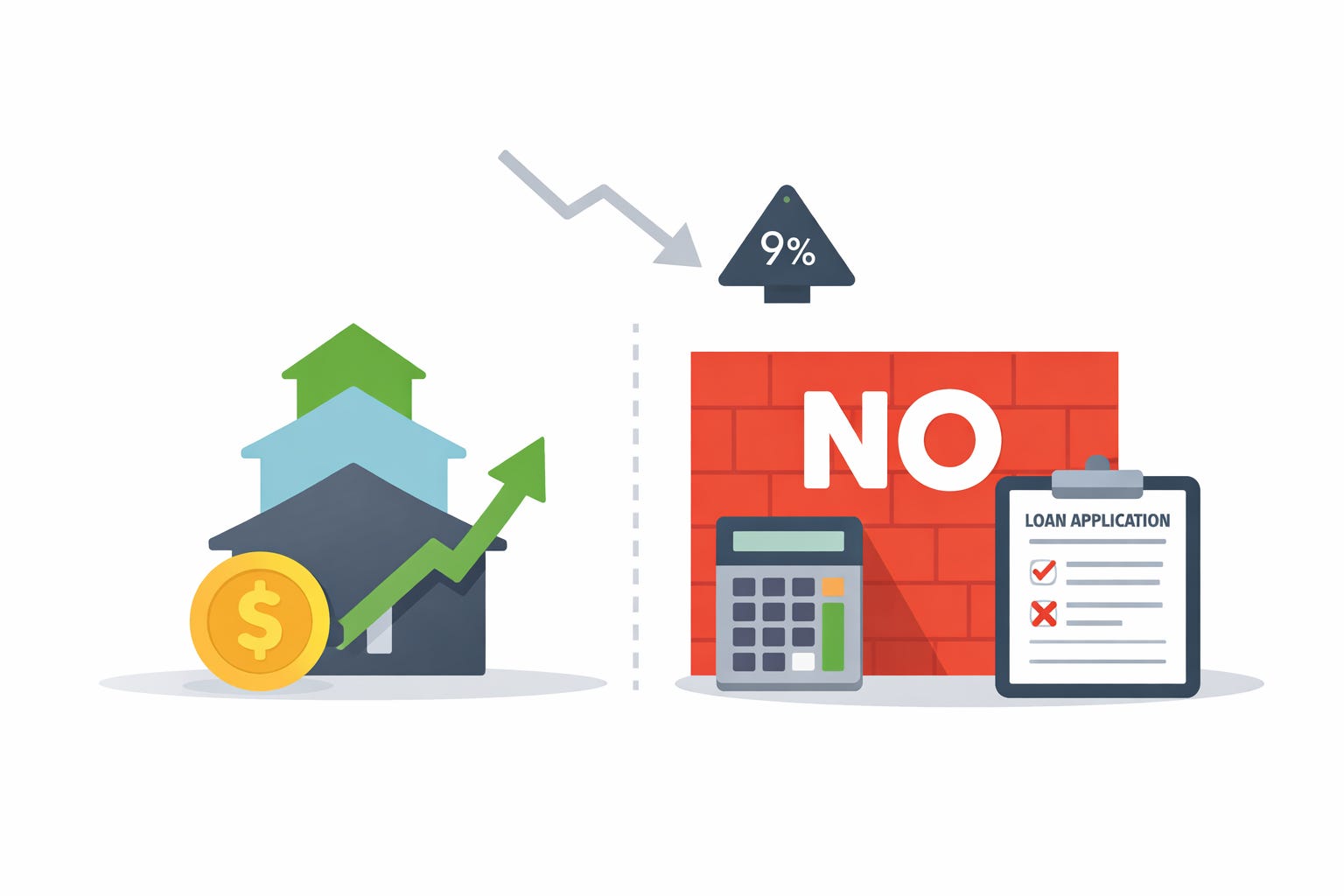
Most property investors don’t run out of opportunities. They run out of borrowing capacity.
You can have a deposit, motivation, even the “right” property lined up, and still hit a hard stop because the bank’s calculator says no. That’s the bottleneck that quietly kills multi-property plans.
This is a practical playbook for keeping your lending power alive: smarter sequencing, cleaner cash flow, and (where it genuinely fits) structures like discretionary trusts, lender strategy, refinancing pathways, and debt recycling.
Quick note: this is general information, not personal tax, legal or credit advice. Get advice for your situation before acting.
The real game is serviceability (not your salary)
Banks don’t just look at what you earn. They stress-test whether you can afford repayments at a higher assessment rate, not today’s interest rate.
So even if your loan rate is around 6%, a lender may assess you closer to ~9% (varies by lender) to make sure you can survive rate rises.
That’s why investors get shocked:
repayments are up to date
equity exists
the deal looks fine “on paper”
…but serviceability still fails.
A major factor is the serviceability buffer. Many lenders apply a buffer of at least 3% when assessing loans, a single setting that can be the difference between buying again or being stuck.
The goal isn’t the biggest loan.
It’s the ability to keep buying quality assets without your own portfolio crushing your borrowing power.
The sequencing rule most people ignore
Most investors don’t get wiped out by one “bad suburb”. They get capped because they buy without a plan the bank’s calculator can survive.
Think portfolio building like a sequence, not a shopping trip. You’re aiming for:
Growth (so equity compounds)
Manageable cash flow (so you can hold through rate cycles)
Repeatability (so you can do purchase #2 and #3 without hitting a wall)
When your strategy is clear, your decisions tighten fast: price point, property type, yield profile, and lending choices become deliberate, not vibes.
Buy assets that can carry themselves
If property one drains your cash flow, property two often never happens.
This isn’t about chasing yield for bragging rights. It’s about minimising cash flow drag so the portfolio stays stable and lenders have fewer reasons to say no.
Plain English: the closer each property gets to standing on its own feet, the longer you can keep playing, and the calmer you’ll feel when rates or life change.
Trusts: useful tool, not a default setting
A discretionary (family) trust is a legal structure where a trustee controls assets and can distribute income to beneficiaries (within the trust deed rules).
Why investors consider it:
sometimes it can help preserve borrowing capacity depending on lender policy
it can change how income is distributed (subject to advice and rules)
it can support portfolio structuring when you’re building beyond one property
But here’s the truth:
A trust doesn’t magically create borrowing power. Outcomes depend on:
lender treatment of trusts and guarantees
how “self-supporting” the trust is
documentation and setup quality
serviceability at the time you apply
How many properties per trust?
There’s no magic number. The ceiling is usually driven by:
cash flow inside the trust
lender serviceability outcomes
deposit and buffer capacity
lender appetite (varies widely)
That’s why some investors end up with “Trust 1, then Trust 2” over time, but only when the numbers still stack up.
What if the property is slightly negative?
Strong long-term buys can start a bit negative (especially early), before rents rise or rates ease.
Some investors keep the structure stable with a planned top-up, a small, budgeted contribution so repayments don’t become stressful.
Line in the sand: if you can’t comfortably cover the shortfall, don’t force it. If the plan requires panic, it’s not a plan.
The deposit reality (no shortcuts here)
Structures don’t replace fundamentals. You still need:
deposit (often 10–20% depending on lender/policy)
stamp duty and purchase costs
buffers for vacancies, repairs and rate changes
Think of structures as changing the chessboard, not removing the need to play well.
The “non-major then refinance” move
Sometimes a major lender shuts you down on servicing even when your deal makes sense. Some investors switch lanes to non-major/specialist lenders that may assess:
income differently
existing debts differently
servicing more flexibly (policy-dependent)
The trade-off is usually:
higher rates
fewer features
tighter terms
It can be a strategy only if there’s a clear exit plan, often refinancing later once the story improves on paper, better repayment history, stronger rent, improved valuation, lower LVR.
Important: policies change. Refinancing later isn’t guaranteed.
Debt recycling: often the simpler lever first
Debt recycling is a structured method of turning non-deductible home loan debt into deductible investment debt over time (when used for income-producing investments and set up correctly).
In plain English:
pay down part of your home loan
re-borrow that amount in a separate split
invest using that split, keeping purposes clean and traceable
Why investors like it (when appropriate):
reduces home debt over time
can improve after-tax outcomes (depends on personal advice)
creates a clearer strategy narrative for future lending
Common mistakes:
mixing personal and investment spending in one loan split
messy redraw/offset use that breaks traceability
poor record-keeping
If you do it, do it neatly, the admin is part of the strategy.
The trade-offs people forget to price in
Land tax can bite
Land tax is state-based and trusts can be treated differently, sometimes with lower thresholds or none at all. That can hit cash flow earlier than expected.
Setup + admin costs are real
Trust deeds, corporate trustee costs (where used), ASIC obligations, annual accounts, bookkeeping and extra coordination all add up.
Losses and tax treatment differ
Trusts don’t behave like buying personally. Losses, distributions and offsets can work differently depending on the structure and your circumstances.
Bottom line: don’t copy a structure because someone online said it worked for them.
Who this suits (and who should keep it simple)
Better fit if you:
want a multi-property portfolio over 5–10 years
have stable income and clean household cash flow
can handle admin (or pay for it)
follow a plan, not impulses
care about repeatable decisions for purchase #2 and #3
Poor fit if you:
want set-and-forget with minimal moving parts
are already stretching cash flow
are buying low-quality assets “just to get started”
don’t want to understand how lending and structure interact
Simple done well beats complex done badly every time.
Conclusion
Most investors don’t stall because they can’t find a deal. They stall because their plan doesn’t protect serviceability.
If you want more than one property, start with a borrowing-capacity game plan before you fall in love with a suburb. The investors who keep moving aren’t necessarily earning more, they’re sequencing better, keeping cash flow cleaner, and choosing structures (if any) for a reason.
Know someone who wants to invest in property this year?
Share this with them, it might save them from buying a “good” property that quietly kills their ability to buy the next one.